The Future of Ghanaian Architecture
Modern sustainable architecture in Ghana represents a fusion of international green building standards with locally-adapted solutions. These innovative approaches address Ghana's unique climate challenges while reducing environmental impact.
Key Green Technologies
Solar Energy Systems
Photovoltaic panels and solar water heaters harnessing Ghana's abundant sunlight for clean energy.
Typical Output: 3-5 kWh/day per m²
Payback Period: 3-5 years
Rainwater Harvesting
Integrated systems for collecting, filtering, and storing rainwater for domestic use and irrigation.
Collection Efficiency: 80-90%
Typical Storage: 5,000-20,000 liters
Passive Cooling
Natural ventilation systems, thermal mass, and strategic shading to reduce mechanical cooling needs.
Temperature Reduction: 4-8°C
Energy Savings: 30-50%
Smart Materials
Locally-sourced sustainable materials like bamboo composites and recycled plastic bricks.
Embodied Energy: 40-60% lower
Local Content: 70-90%
Featured Sustainable Projects
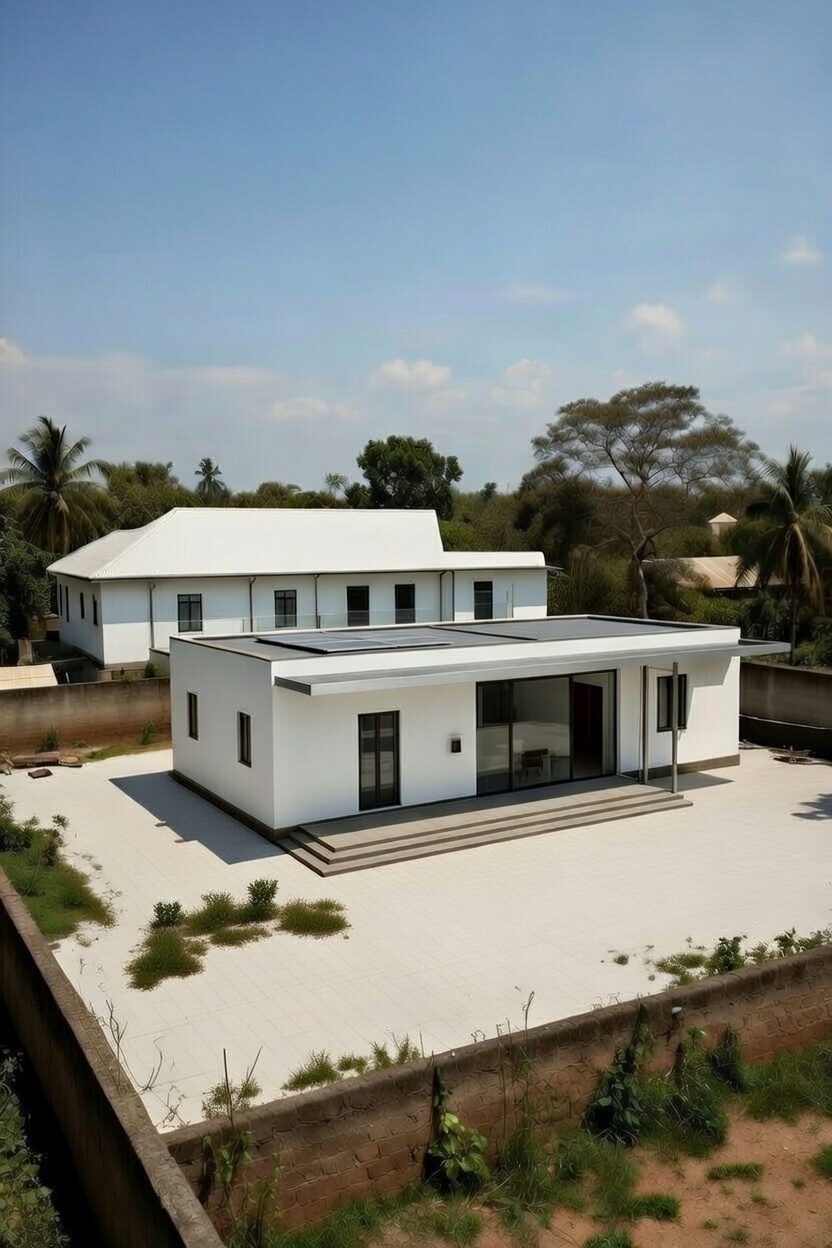
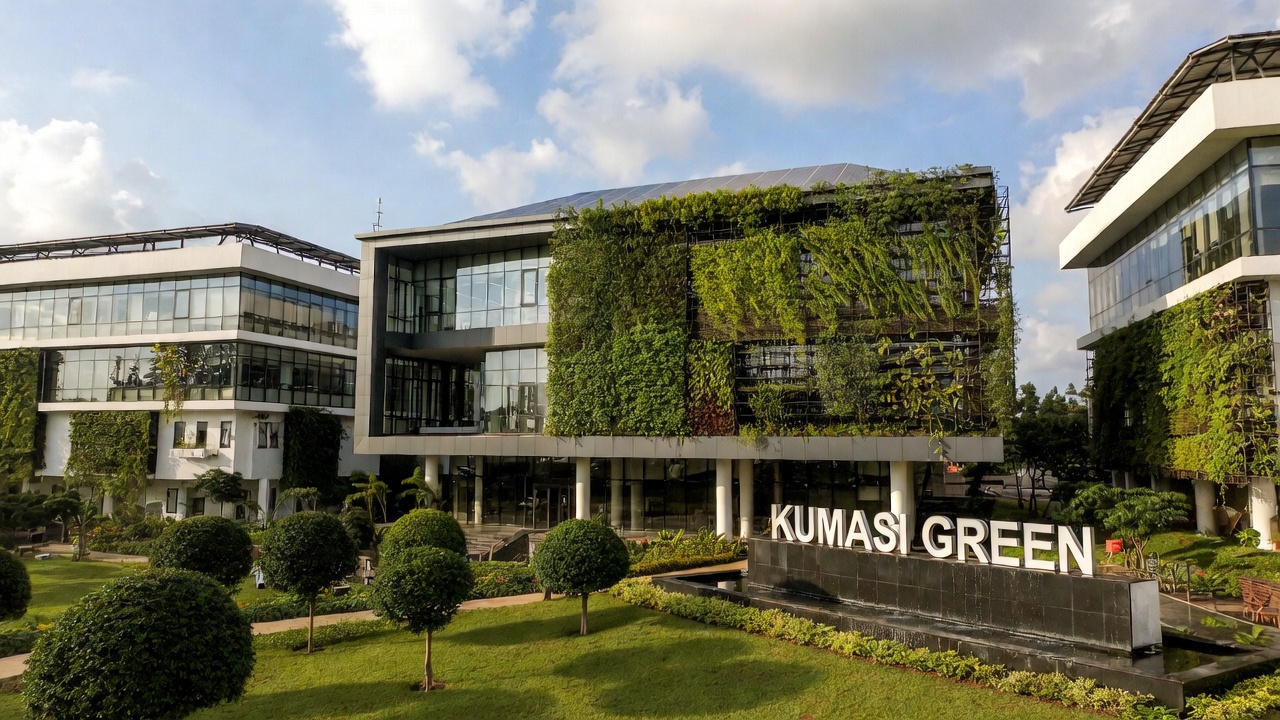
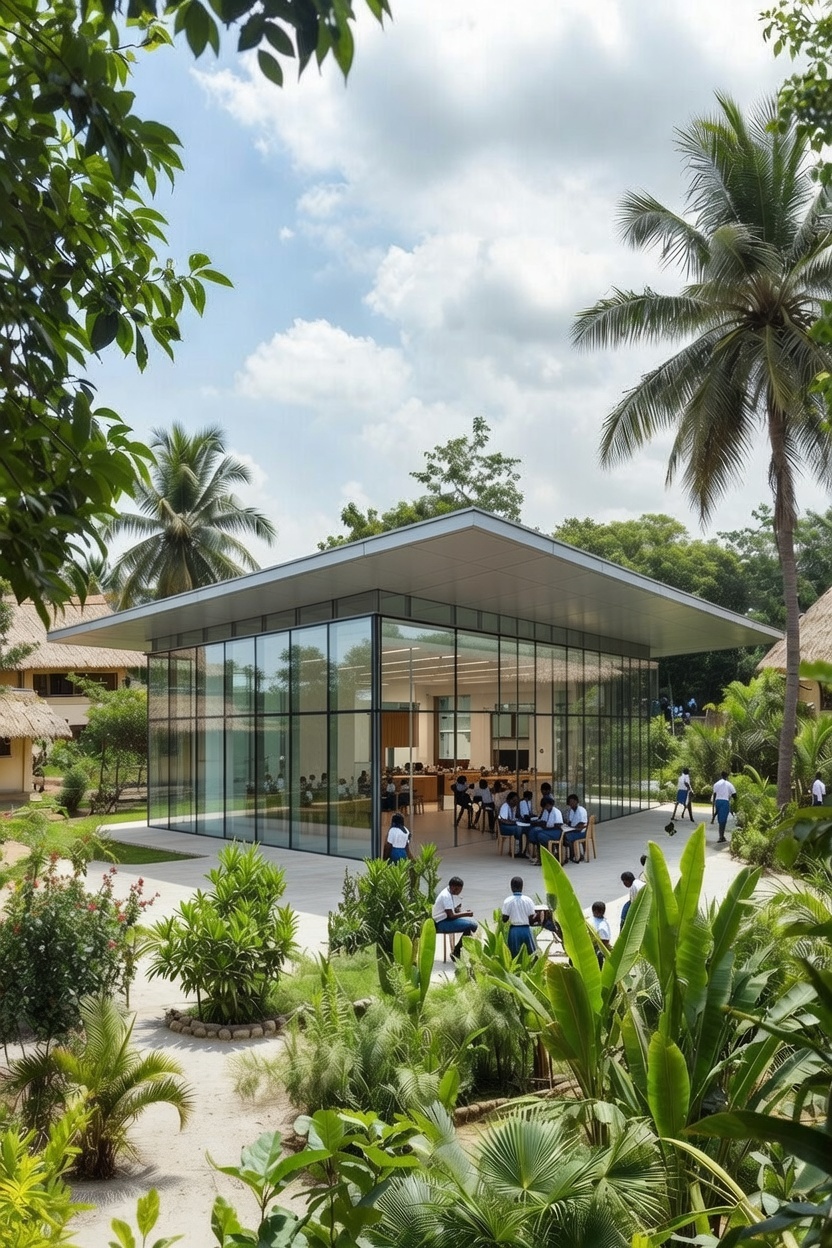
Energy Savings Calculator
Estimate potential savings from adopting sustainable building practices:
Estimated Savings
Energy Savings
0% reduction in energy consumption
Cost Savings
₵ 0 monthly savings
Annual Energy
0 kWh saved
Carbon Reduction
0 kg CO₂/year
Return on Investment
0 years
Timeline of Green Innovations
2005-2010
Early Adoption: Introduction of basic solar water heaters and rainwater harvesting in premium residential projects.
2011-2015
Policy Development: Ghana Green Building Council established. First LEED-certified buildings completed.
2016-2020
Technology Integration: Smart home systems, advanced PV systems, and green building materials become more accessible.
2021-Present
Mainstream Adoption: Net-zero energy buildings, circular economy principles, and AI-driven energy management systems.
Economic Benefits of Green Buildings
Sustainable architecture isn't just good for the environment—it makes economic sense too:
Higher Property Values
Green buildings command 5-15% higher market values and rental rates
Improved Occupant Health
Better indoor air quality leads to 10-20% fewer sick days
Reduced Operating Costs
Energy savings of 25-50% and water savings of 30-50%
Future-Proof Investment
Compliance with evolving environmental regulations and standards